Impact Causality: The Next Frontier in AI-Driven Asset Management
Impact Causality: why AI-driven asset management must go beyond correlation and use causal AI to judge the risk and reward of investment decisions.


“In God we trust. All others must bring data” — a quote attributed to a famous polymath and statistician Edwards Deming[1], who brought total quality management (TQM) principles to the traditional manufacturing industry in general, and automobile industry in particular, underscores the recognition that data is central to decision making and process improvement, as early as a half a century ago.
The Importance of Data in AI and ML
With all the rage, excitement, and also hype around AI, more so around the models, Andrew-Ng, a pioneer in the modern AI/ML world, has to remind us to adopt a data-centric approach[2] to solving problems using AI/ML. Again, data is at the centre. Recent progress in Large Language Models (LLMs) also suggests that quality data (what kind, rather than, how much) is beginning to make smaller LMs comparable to large LMs[3].
Encoding World Knowledge in Models
We get that data is important, and given data, we can build models, but how do these models encode world knowledge (represented implicitly in the training data) and how can one use those models to make decisions? These questions are different but often get conflated and de-emphasised. Further, current practice of AI/ML reduces ML/AI to prediction machines. Note that classical large scale statistical modelling & pattern matching from large datasets have been proven very successful, exemplified by the pioneering works of Jim Simmons[4], a celebrated mathematician and hedge fund manager. But all such classical technologies were disrupted, thanks to modern deep learning architectures, which we now term as AI. Can the benefits of AI be applied in the investment side as well? There are two main issues we see in scaling and applying AI in the FinTech world.
Limitations of Current AI Models
The key problem is with how AI is being looked at and solved. They exclusively focus on retrieval and recall of information encoded in the models — be it the traditional AI/ML or the Generative AI. As Subbarao et al[5] work suggests, even LLMs are approximate retrieval engines, despite the claims about the emergence of sparks of Artificial General Intelligence (AGI)[6]. This appearance of intelligence seems to be more about compositionality, than it is about causality, common sense, world knowledge, generalisation, abstraction, reasoning and planning, which are also central to intelligence besides recollection and composition of course.
The Shift from Prediction to Decision-Making
Current AI wave, the Generative AI wave we are talking about, is particularly good at creativity (a euphemism for hallucinations) but that creativity must also be grounded in reality for it to be applied in business settings. Is prediction and imitation the goal of AI, as one considers the Turing Test to be the ultimate test of AI? Prof. Michael Jordan argues for an alternative AI which absorbs and embraces economics[7], moving away from imitational prediction machines to decision-making machines, situated within the context of markets and economies. It might also be necessary to integrate formal methods into AI modelling via some sort of neural-symbolic integration to enable this decision making that is both plausible and sensible in the real world. The key take-away is to make AI/ML decision-centric by putting decision making at the centre of modelling as opposed to just making predictions. And for this to happen, we have to model the risk of the decisions and we must also put the language of causality in the driver seat.
Correlation vs. Causation in AI
It leads us to another problem of correlation vs causation in modelling. In varied, complex real world situations, when causal factors are not declared and measured, one will be tempted to act on spurious correlative factors rather than causative factors. A famous example comes to mind[8] — when a Ford driver buys vanilla flavoured ice cream, the engine stops but when the driver buys any other ice cream, it works fine. What conclusion can we make and what action can we take? If it were a traditional ML/statistical model, the recommendation would be to not buy vanilla ice cream for the engine to perform properly.
It sounds stupid but models not grounded in causality and physical reality can have unbounded stupidity like this.
The Role of Causality in Investment
Prof. Judeal Pearl, in his explosive self[9], argues for the mind over data, which in our interpretation means, ML modelling must be reactionary to the causative view of the world model and not the other way around. For example, below is a causal graph depicting the impact of COVID-19. Specifically, it shows how shortage of semiconductor chips led to a shift in consumer spending which had an impact on the environment, for example. This type of causality of events is critical in assessing the risk of an investment on a set of plausible events.
Press enter or click to view image in full size
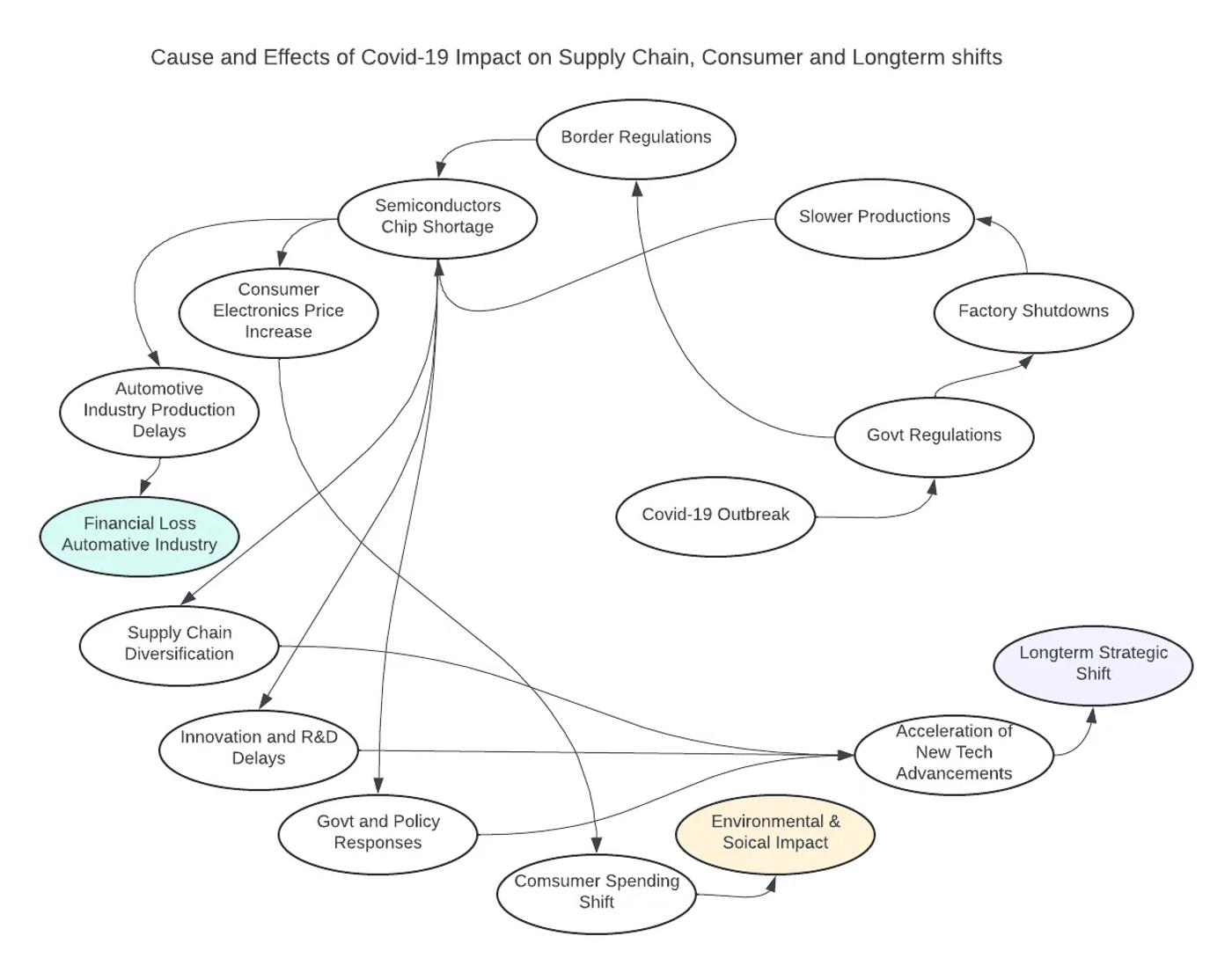
Fig 1: Causal web of effects triggered by Covid-19 outbreak
HyperNorm’s Vision for Causal AI
It then implies that the pivot from the run-off-the-mill AI prediction machines which exploit large scale correlations is indeed very critical and central to enabling decision makers in general, and in the investment management industry, in particular. Besides the philosophical and ideological underpinnings that form the core vision of HyperNorm, we have set forth to amplify the agency of decision makers and investment analysts by providing them with a curated view of the causative web-of-events at internet scale. What it means for users of HyperNorm products and services in practical terms is, they would be able to identify events, their causes, and their impact in improving the bottomline. Below we articulate our vision depicted in the Figure below.
Press enter or click to view image in full size
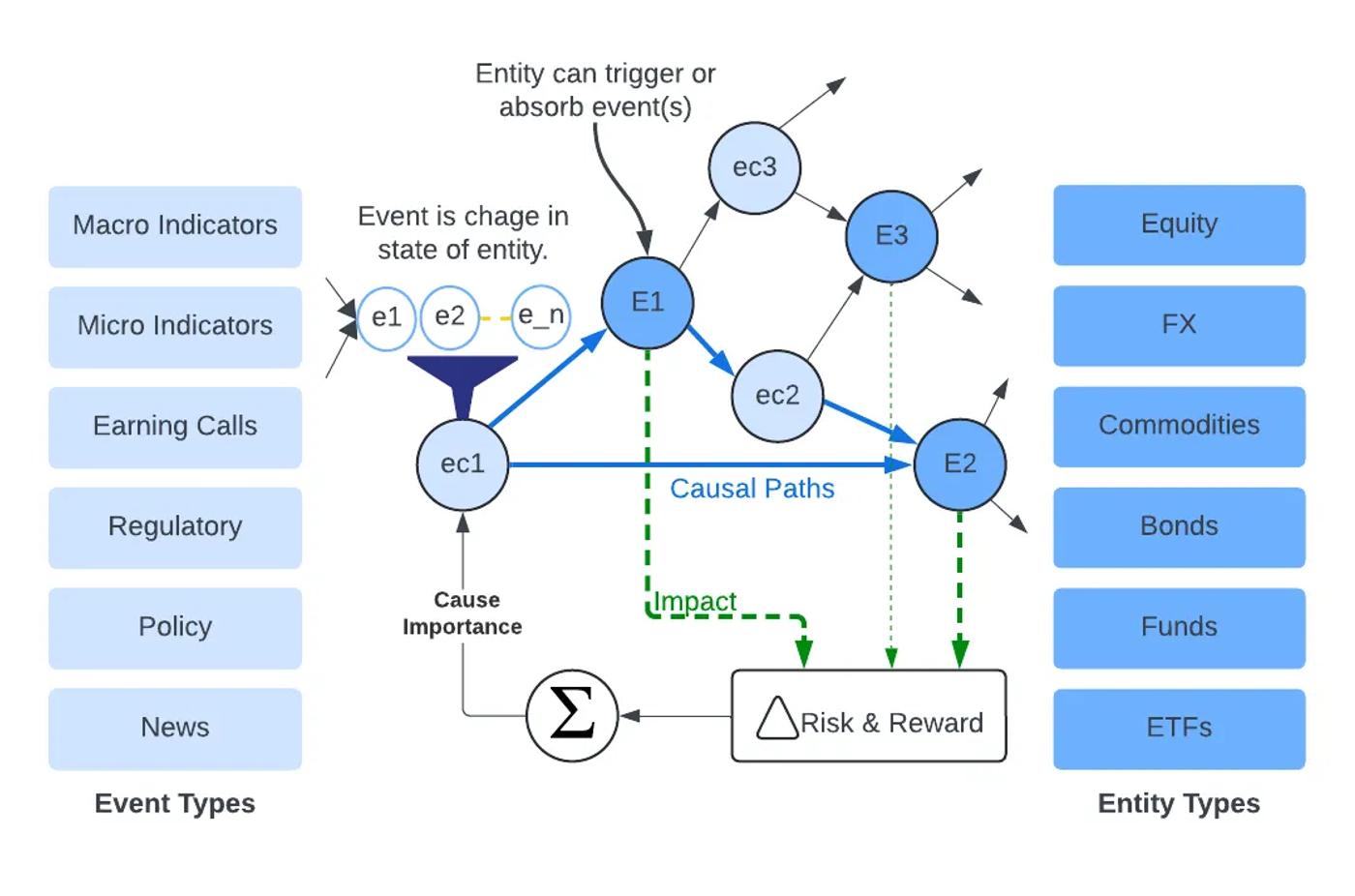
Fig 2: Cascading Impact of Events on Financial Entities
Few things to unpack: Entities are things that are traded in the markets. Besides, they can also include persons, things, places, organisations, among others. Entities have states which can change with time, due to actions by the Entity itself or other Entities. This state change is described as an Event. A set of Events causes another set of Events which is represented by the connected path in the events-entities graph. An Event is a result of an action which may not be directly observable always but can be observed indirectly via news alerts, public announcements, social media etc. So all financial and even non-financial activity can be modeled a causal graph. One primary Event we like to model is the Risk and Reward on Event, in absolute and differential sense, due another set of Events. Under this framework, we are putting decision-making based on Risk and Reward modelling at the centre, and causal graphs to enable either identification of impactful events or running plausible actions to actuate a desirable state change of a financial Entity of interest. This approach of ours, we believe, can disrupt the Fintech industry.
Welcome to the world of causal impact and master your moves!
[1] Edwards Deming, [wiki]
[2] Andrew Ng’s [data-centric AI]
[3] Data Quality May be All You Need, [article]
[4] Jim Simmons [wiki]
[5] Subbarao et al, LLMs can’t plan but can help plan [article]
[6] Sparks of AGI [article]
[7] Michael Jordan on Turing test is bad [article], alternative view on AI [article], economics approach to AI [article]
[8] Correlation vs Causation, the Truck and Icecream problem, article
[9] Judea Pearl and Dana Mackenjie The Book of Why, Judea Pearl’s tweet on Data over Mind [here]
More from the blog

Discover how higher-order agentic systems combine contextual memory, scenario simulation, and adaptive reasoning to help wealth managers interpret market shifts, compare possible futures, and inform investment decisions.


Explore how dynamic code, neuro-symbolic systems, and stateful AI combine to create financial intelligence that adapts to complex portfolio questions, preserves context, and supports informed decisions as markets evolve.

Explore how inductive reasoning, deductive rules, and reinforcement learning work together in financial AI, helping fund managers interpret market signals, assess risks and make decisions while retaining human oversight.